
Tracking QA and implementation testing
Ecommerce tracking audit
A command line tool that opens a store, finds a product, adds it to the cart, reaches checkout, and checks the tracking evidence created at each step.
Problem
A dataLayer event is not delivery proof.
A store can show the right event name in GTM while the request to GA4 or Meta is missing. Checking that path by hand takes time and can produce unclear results.
The test needed to follow the customer journey.
A user gives the tool one homepage URL. It discovers a product and follows the public store flow through checkout initiation.
The audit records the website event and the provider request as separate evidence. This prevents a dataLayer push from being reported as proof that a platform received the event.
Implementation
One URL starts the full browser check.
The browser keeps a record of the route, action, dataLayer push, tracking request, provider ID, and HTTP response at each supported stage.
- DiscoverFind a public product from the homepage or sitemap.
- ActOpen the product, add it to cart, and reach checkout.
- CaptureRecord dataLayer pushes, provider requests, IDs, and responses.
- ReportWrite HTML, CSV, JSON, and journey screenshots.
Test evidence
The result separates what worked from what was not proved.
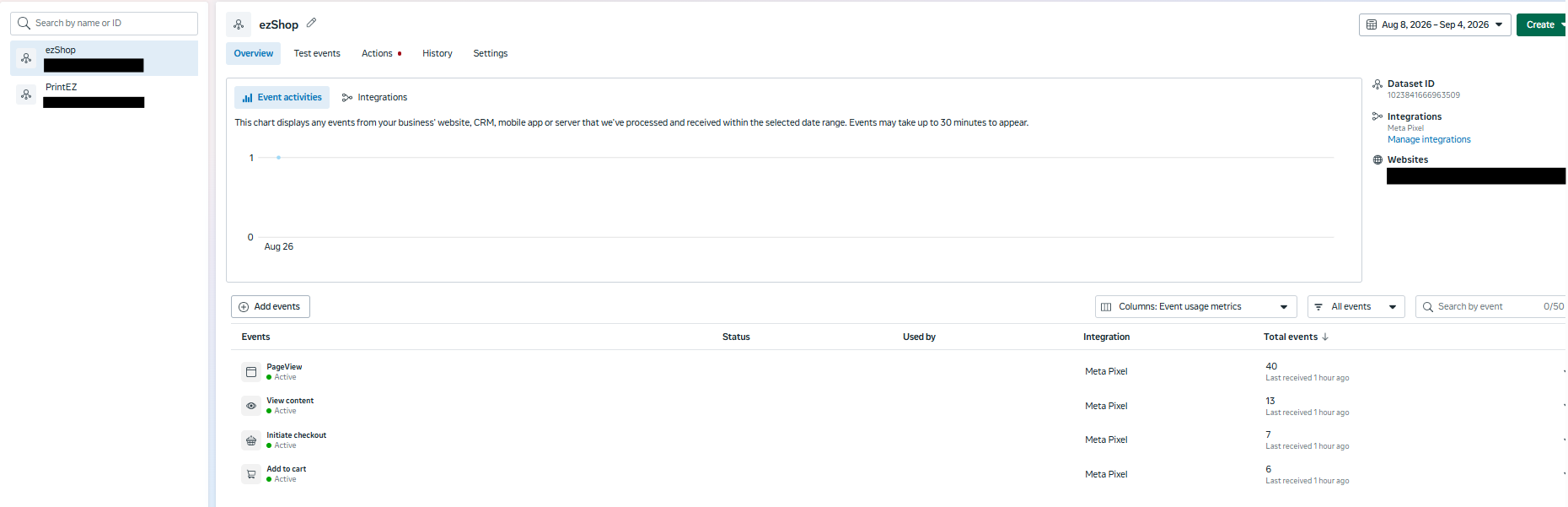
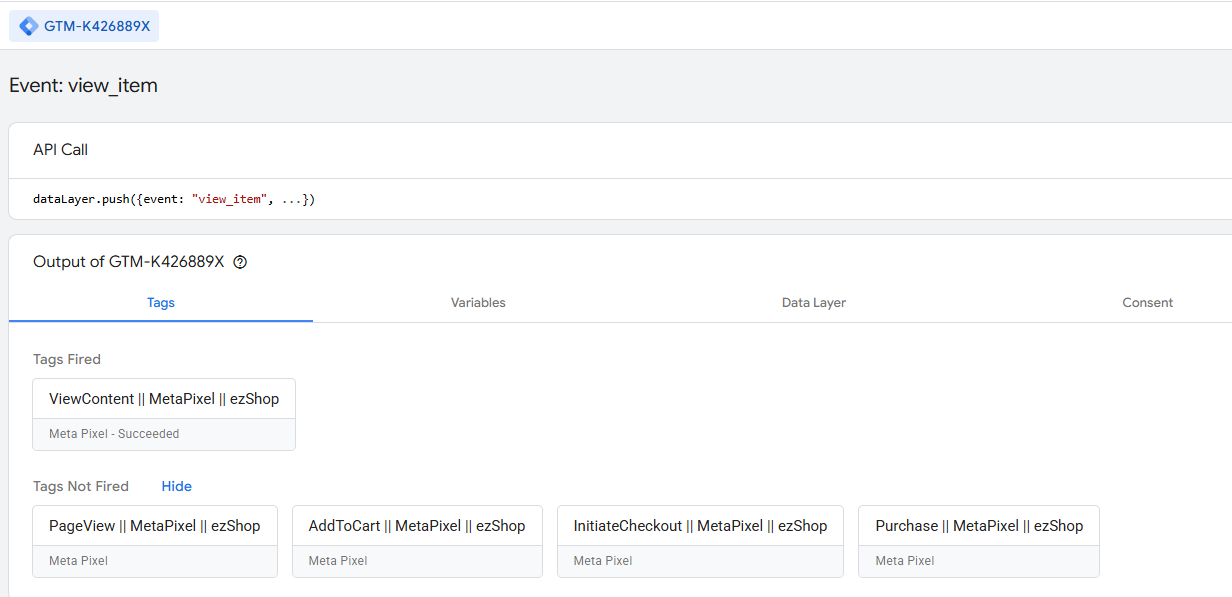
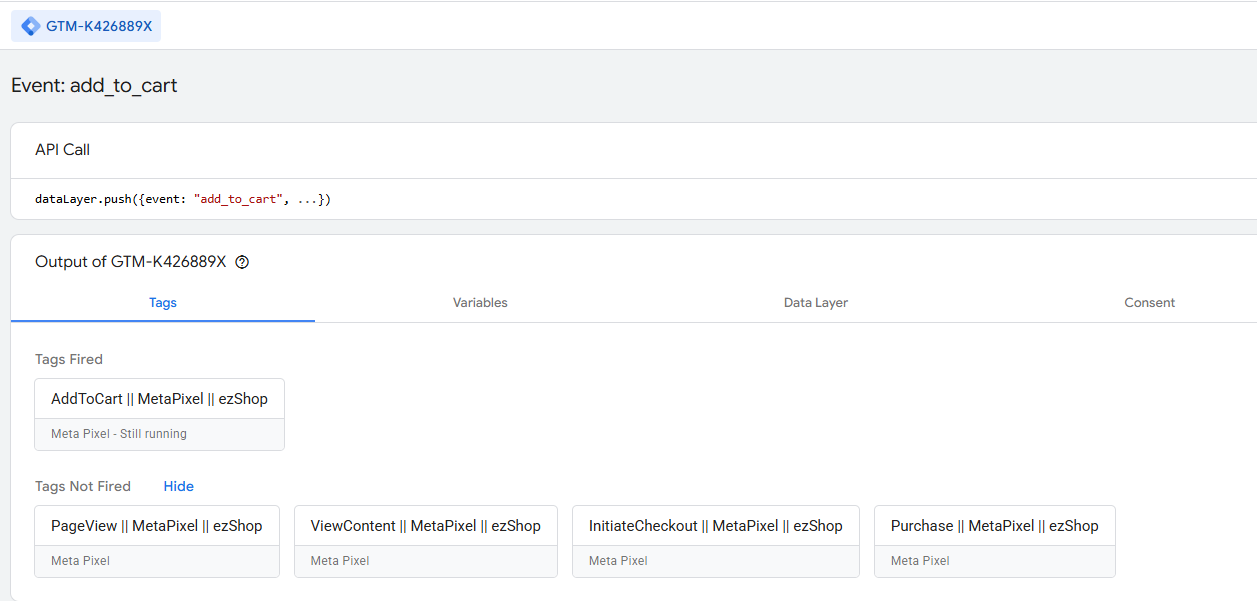
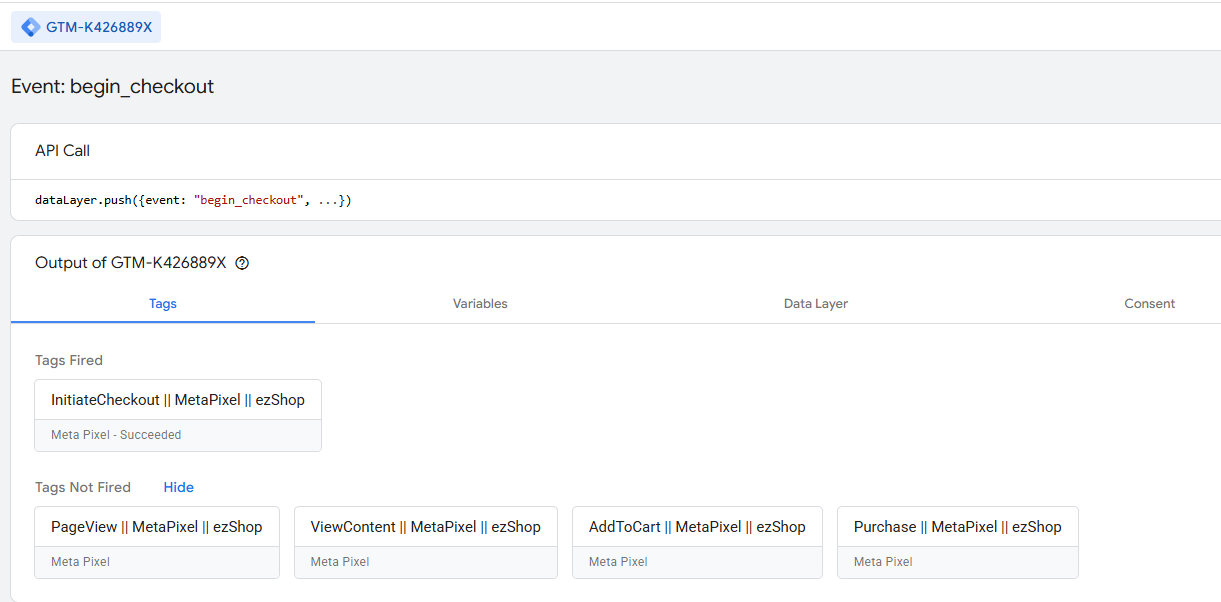
The test store reached all four journey stages. Meta sent the three expected events. GA4-style events appeared in dataLayer, but no standard GA4 collection request was captured.
Homepage, product, cart, and checkout were opened successfully.
ViewContent, AddToCart, and InitiateCheckout returned HTTP 200.
The triggers existed in dataLayer, but the audit found no standard GA4 request.

Result
A reusable audit with inspectable evidence.
- Input
- One ecommerce homepage URL, with an optional product URL.
- Browser output
- Journey coverage, screenshots, dataLayer pushes, tracking requests, provider IDs, and HTTP responses.
- Files
- report.html, summary.csv, tracking_requests.csv, data_layer.csv, and journey.json.
- Privacy
- Known personal data fields are redacted before evidence is saved.
Limits
The report stays inside what the browser can prove.
The tool reports the evidence it observes. It does not turn an incomplete signal into a successful result.
No order is submitted and the purchase event is not tested.
Server-side events and final attribution inside an advertising platform are outside this audit.
A custom first-party tracking proxy may need its endpoint added to the tool.
Some storefronts require extra selectors for products, carts, consent, or checkout.